
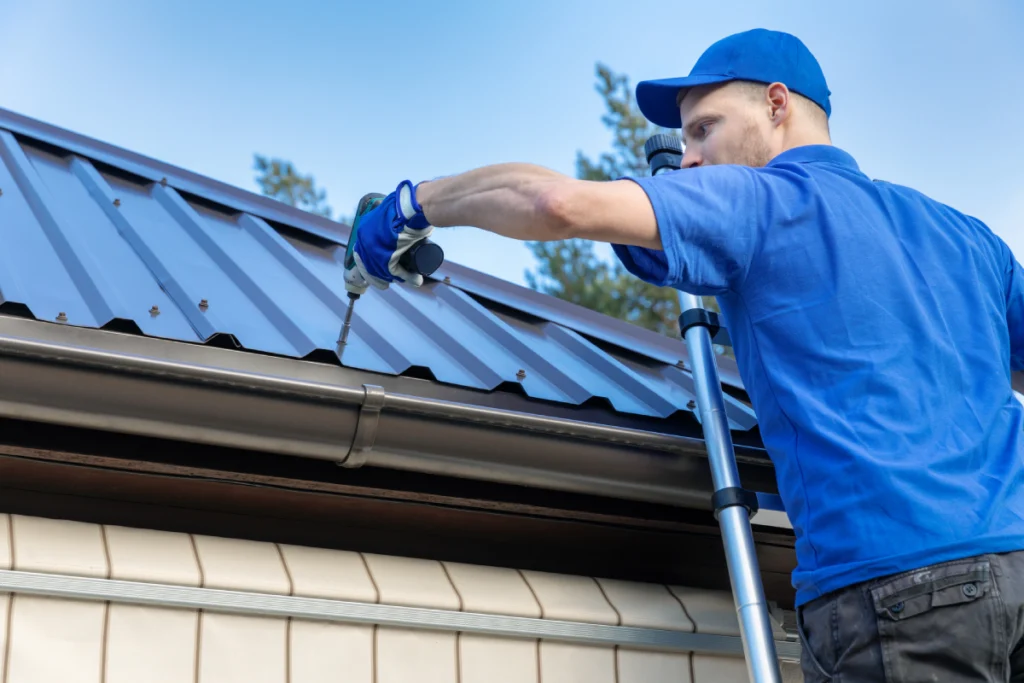
Metal Roof Vs. Asphalt Roof Cost
A property owner in Kirksville, Missouri, called us after his third asphalt shingle repair in eight years. The original roof had seemed like the smart, budget-friendly choice. By the time we arrived, he’d spent nearly as much on emergency patch jobs as a full metal roof would have cost him upfront. “I thought I was saving money,” he said. “I wasn’t.”
That story isn’t unusual. When it comes to metal roof vs. asphalt roof cost, the number on the initial quote tells only half the story — and for most property owners, it’s the wrong half.
In this guide, you’ll learn exactly how these two roofing materials compare in upfront cost, lifespan, maintenance burden, energy performance, and true long-term value — so you can make a decision you won’t regret a decade from now.
Asphalt Shingles Vs. Metal Roofing
At their core, these are two very different approaches to the same problem: keeping water, wind, and weather out of your building.
Asphalt shingles are the most widely installed roofing material in the United States. They consist of a fiberglass or organic base mat coated with asphalt and topped with protective mineral granules. They’re accessible, fast to install, and widely understood by most roofing contractors.
Metal roofing — which includes standing seam steel, corrugated panels, aluminum, and specialty metals like copper or zinc — is a systems-based approach. Panels interlock or overlap to create a continuous water-shedding surface, and the substrate itself (the metal) is the primary protective layer rather than surface granules.
| Feature | Metal Roofing | Asphalt Shingles | |
| Avg. Lifespan | 40–70+ years | 15–30 years | |
| Upfront Cost (installed) | $10–$16+ per sq. ft. | $4.50–$12.25 per sq. ft. | |
| Energy Efficiency | High (reflective) | Lower (heat-absorbing) | |
| Maintenance Needs | Minimal | Moderate to frequent | |
| Noise | More during heavy rain | Quieter | |
| Fire Resistance | Non-combustible | Flammable |
Understanding this distinction is foundational. The roofing material comparison is not just about price per square foot — it’s about the full performance profile over the life of the building.
Why Metal Roof vs Asphalt Roof Cost Is the Wrong Question to Ask First
Most property owners search for a price. But the smarter question is: what will this roof cost me over the next 30 years?
“The cheapest roof you can buy today may be the most expensive roof you ever own.”
Because a metal roof lasts 50–70 years compared to shingles’ 25 years, one metal installation covers the lifespan of two asphalt shingle roofs. You pay more now to avoid paying for a second — or third — roof later.
Metal roofing offers a higher ROI at 60%–70%, thanks to its longer lifespan, superior energy efficiency, and exceptional durability. Meanwhile, asphalt shingles — while affordable upfront — carry hidden costs that accumulate quietly: granule loss, UV degradation, mold vulnerability, and wind uplift over time.
There’s also the energy dimension. Metal roofs reflect solar heat, reducing cooling loads and potentially cutting energy bills by 10%–25% in the summer. That’s a number that compounds over decades on commercial and residential buildings alike.
Ignoring long-term roofing costs in favor of the sticker price is one of the most common — and most expensive — mistakes property owners make in North Central Missouri and across the heartland.
Key Factors That Determine Which Roof Actually Costs You Less
1. Lifespan and Replacement Frequency
Metal roofs typically last 40–70 years, while asphalt shingles usually last 15–30 years. That gap isn’t abstract. It means that over the lifetime of a commercial or residential building, an asphalt roof may need to be replaced two or three times — each time incurring full material costs, labor, tear-off, and disposal fees.
For a 2,000 sq. ft. structure, that can mean paying for the same roof multiple times over. The cost of replacing an asphalt roof compounds with inflation each cycle — a reality that rarely shows up in the initial quote comparison.
2. Upfront Metal Roofing Installation Cost
The 2025 national average cost of a steel standing seam metal roof is $51,865, while an architectural asphalt shingle roof averages $31,871. The price gap is real. Metal roofing requires specialized installation, precision cutting, and more complex fitting — all of which drive labor costs higher than asphalt work.
However, context matters. The metal roofing installation cost on a commercial flat or low-slope building differs significantly from a residential steep-slope project. Roof complexity, existing substrate condition, and whether a tear-off is required all influence final pricing. At Show Me Coatings, we’ve seen Missouri property owners save substantially by restoring an existing metal roof rather than pursuing a full replacement — a route worth exploring before signing any tear-off contract.
Looking to extend the life of your existing metal roof without a full replacement?
Explore Our Metal Roof Restoration Services
3. Maintenance Costs Over Time
Asphalt shingles require more active stewardship. Granule loss accelerates in regions with temperature swings — something Missouri property owners know well. Asphalt shingles have higher maintenance needs: routine inspections and repairs are needed to maintain their structure, and they are more vulnerable to weather damage and issues like mold, rot, or algae growth.
Metal roofing, by contrast, demands less frequent intervention. The primary maintenance concern on aging metal roofs is seam separation, fastener backing, and surface oxidation — all of which can be addressed with a professional coating system rather than a full panel replacement. Our team at Show Me Coatings regularly works with Missouri and Iowa building owners to restore commercial metal roofs at a fraction of replacement cost, sealing seams, neutralizing rust, and applying reflective coatings that add years of functional life.
4. Energy-Efficient Roofing Performance
Metal roofs feature special reflective coatings that reflect solar radiant heat away from the home. In Missouri summers — which regularly push into the high 90s — that thermal performance matters. Lower energy efficiency from asphalt shingles often results in higher cooling costs in hot months.
Energy-efficient roofing isn’t just a comfort upgrade; it’s a cost-reduction strategy with a measurable payback period. ENERGY STAR® and the U.S. Department of Energy both recognize cool roofing systems — including reflective metal coatings — as meaningful contributors to building energy performance.
5. Weather Resistance and Regional Risk
Missouri sits in a region that sees hail, ice storms, high winds, and dramatic freeze-thaw cycles. Metal roofs are rated for 140+ MPH winds and resist hail damage that often cracks shingles, translating to fewer emergency repairs after storms and potential savings on homeowners’ insurance premiums.
Asphalt shingles, while improved over earlier generations, remain vulnerable to impact damage, ice dam infiltration, and granule stripping from severe hail. In a single storm season, an asphalt roof can sustain damage that accelerates its aging by years — damage that often isn’t visible until a leak appears inside.
Common Mistakes Property Owners Make When Comparing Roofing Costs
Comparing only material cost per square foot.
Labor, complexity, and regional market conditions all significantly alter final pricing. A low per-square-foot material figure can be offset entirely by difficult installation conditions.
Ignoring the roof’s current condition before deciding. Many property owners price a full tear-off replacement when a professional restoration — coating, seam reinforcement, and rust treatment — would add a decade or more of life at a fraction of the cost. This is especially true for commercial metal roofs showing surface oxidation or minor leak points.
Assuming asphalt is always the practical choice.
For buildings expected to remain in service for 30+ years, the math often flips. Two asphalt replacements with inflation-adjusted labor and disposal costs can easily exceed the original metal roof price comparison.
Skipping professional assessment.
The best roofing material for your building depends on slope, existing substrate, regional climate, and intended building lifespan — variables that only a professional site assessment can properly account for.
Want to understand what your existing roof actually needs before making a costly decision?
Schedule a Free Roof Assessment with Show Me Coatings
What Does a Metal Roof or Asphalt Replacement Actually Cost in Missouri?
Cost ranges for residential roof replacement vary considerably based on size, pitch, and material grade:
- 3-tab asphalt shingles: Budget entry point, but the shortest lifespan and lowest performance rating
- Architectural (dimensional) asphalt shingles: The most popular mid-grade option, typically lasting 25–30 years in Midwest climates
- Standing seam metal roofing: Higher upfront investment, lowest long-term total cost for buildings staying in service 40+ years
- Metal roof restoration (commercial): Often the most cost-effective path for existing metal roofs showing age, typically a fraction of full replacement cost
For commercial buildings in Missouri and Iowa, a restoration coating system from Show Me Coatings can extend roof life by 10–15 years while improving energy reflectivity — without the disruption, waste, or full capital outlay of a tear-off replacement.
The National Roofing Contractors Association (NRCA) recommends professional inspections every two years for commercial roofing systems and after any significant weather event — guidance that applies whether your building has metal or membrane roofing.
We’ve covered the full fabric-reinforced roofing option in detail in our blog on Commercial Fabric Roof Systems — worth reading if your building uses a flat or low-slope system.
The Roof Decision That Actually Saves You Money
The metal roof vs. asphalt roof cost question is ultimately a question about time horizon. If you’re making a short-term decision for a building with a limited service life, asphalt shingles may be the practical choice. But if you’re protecting a building you intend to own, operate, or sell over the next 20–40 years, the math consistently favors metal — especially when professional restoration is available to extend an existing metal roof’s life before full replacement becomes necessary.
“The most expensive roof isn’t the one with the highest quote — it’s the one you have to replace twice.”
At Show Me Coatings, our professionals have worked on commercial roofing systems across Missouri and Iowa long enough to recognize the patterns: the building owners who invest in quality upfront or restore proactively spend significantly less over the long run than those who chase the lowest initial price. That’s not a sales pitch — it’s what the numbers show, project after project.
Whether your building needs a restoration coating, a new metal system, or simply a professional assessment to understand what’s actually going on up there — the first step costs you nothing.
Call Show Me Coatings or Book Your Free Consultation Today
Office: 660-956-0141 | 24hr Emergency Line: 660-216-1932 Serving Kirksville, Moberly, Columbia, Kansas City, St. Louis, MO & Des Moines, Ottumwa, Iowa City, IA
Frequently Asked Questions: Metal Roof vs Asphalt Roof Cost
1. What is the average cost difference between a metal roof and asphalt shingles?
Quick answer: Metal roofs typically cost 2–3x more upfront than asphalt shingles. Nationally, architectural asphalt shingles average around $31,871 installed for a standard home, while standing seam metal roofing averages closer to $51,865. However, this upfront comparison doesn’t account for lifespan—one metal roof can outlast two or more asphalt roofs, significantly changing the long-term cost over 40+ years.
2. Is a metal roof cheaper in the long run than asphalt shingles?
Quick answer: Yes—over 30+ years, metal is often more cost-effective. Because metal roofs last significantly longer and require less maintenance, they often result in lower total ownership cost over time. Avoided replacement cycles and potential energy savings contribute to this advantage.
3. How long does a metal roof last compared to asphalt shingles?
Quick answer: Metal roofs last 40–70 years; asphalt shingles last 20–30 years. This lifespan gap is the primary driver behind the long-term cost difference between the two materials.
4. Which roofing material performs better in Missouri’s weather?
Quick answer: Metal roofing generally performs better. Missouri’s hail, temperature swings, and freeze-thaw cycles are tough on asphalt shingles. Metal roofing offers superior resistance to impact, moisture, and thermal expansion, though asphalt can still perform well with proper maintenance.
5. Does metal roofing require special maintenance?
Quick answer: Less than asphalt, but periodic inspections are recommended. Metal roofs are low-maintenance, but checking seams, fasteners, and coatings periodically helps prevent minor issues from becoming major repairs.
6. Are metal roofs louder than asphalt shingles during rain?
Quick answer: Slightly—but proper insulation minimizes the difference. Noise is most noticeable in exposed systems without insulation. Properly installed metal roofs often sound similar to asphalt from inside the building.
7. What types of metal roofing are available for commercial buildings?
Quick answer: Standing seam, corrugated, and exposed fastener systems. Standing seam offers the best durability and leak resistance, while corrugated and exposed fastener panels provide more budget-friendly options.
8. Can a metal roof improve energy efficiency?
Quick answer: Yes—metal roofs can reduce cooling costs by 10%–25%. Reflective surfaces reduce heat absorption, lowering indoor temperatures and decreasing HVAC usage, especially during hot Missouri summers.
9. Can you install a metal roof over existing asphalt shingles?
Quick answer: Sometimes, depending on structure and code. Overlaying metal on shingles can reduce tear-off costs, but it depends on building codes, roof condition, and structural capacity.
10. How do I know if my metal roof needs restoration or replacement?
Quick answer: Minor issues suggest restoration; structural damage suggests replacement. Surface rust, small leaks, or seam separation can often be addressed with restoration. Widespread damage or compromised structure typically requires full replacement.
11. How does metal roof restoration compare to full replacement cost?
Quick answer: Restoration is significantly cheaper when the roof is structurally sound. Restoration (cleaning, sealing, coating) can extend roof life by 10–15 years at a fraction of replacement cost.
12. What is the best roofing option for a commercial building in Missouri?
Quick answer: It depends on roof type and use. Flat or low-slope roofs often benefit from membrane or coating systems, while sloped roofs are ideal for metal roofing solutions.
13. Does metal roofing increase resale value?
Quick answer: Yes—due to durability and lower long-term costs. Buyers and investors often value metal roofs for their longevity, efficiency, and reduced maintenance needs.