
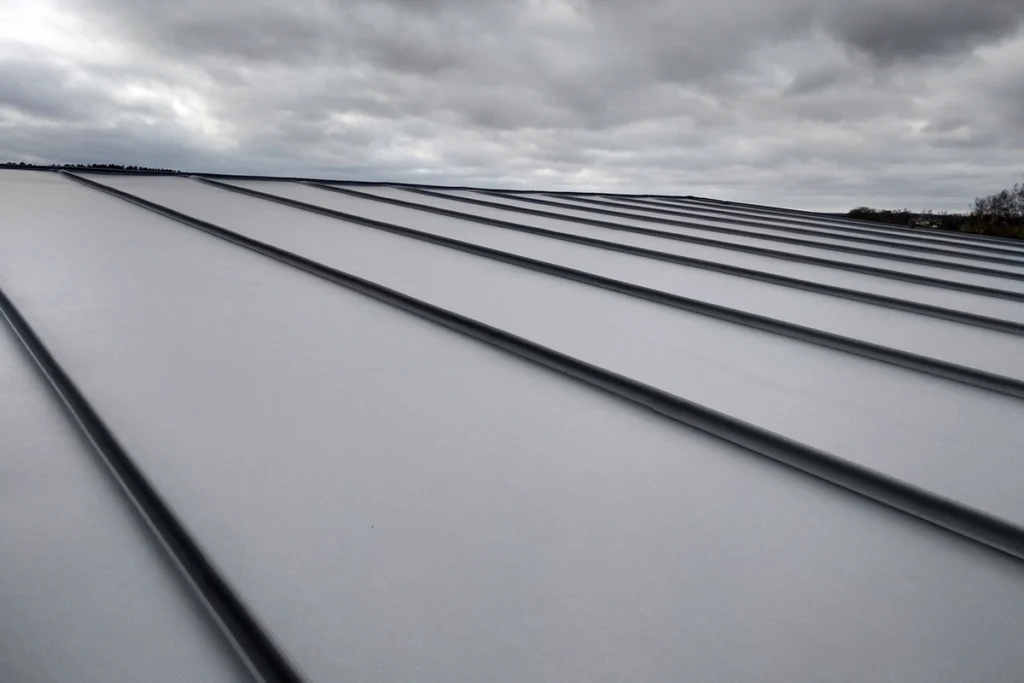
You’re standing on the roof of a commercial building, looking out at a smooth, seamless surface that shows no shingles, no tiles, and no visible fasteners. What you’re looking at is almost certainly a single-ply membrane roofing system, and there’s a very good reason it dominates the commercial low-slope roofing market.
Single-ply systems now account for the majority of new commercial roofing installations in North America. Yet most building owners, facility managers, and even some general contractors have only a surface-level understanding of what these systems actually are, how they differ from one another, and why the choice between TPO, PVC, and EPDM matters more than many people realize.
If you manage, own, or maintain a commercial or industrial building with a low-slope roof or flat roof, this single-ply membrane installation guide is for you. By the end, you’ll understand exactly what single-ply membrane roofing is, how each major system type performs, when to use which, and what separates a well-specified installation from one that fails prematurely.
Single-Ply Membrane Roofing System Explained
Single-ply membrane roofing is a category of commercial roofing system in which the primary waterproofing layer consists of a single, factory-manufactured sheet of flexible membrane material, as opposed to multiple built-up layers applied on-site.
These membranes are engineered to specific thicknesses (typically 45 mil to 90 mil), chemical compositions, and reinforcement profiles. They are installed over a substrate (typically rigid insulation board) using one of three attachment methods: fully adhered, mechanically fastened, or ballasted.
The term “single-ply” refers to the membrane itself, one continuous sheet rather than the multiple plies of felt and asphalt that characterize traditional built-up roofing (BUR) systems.
| Feature | Single-Ply Membrane | Built-Up Roofing (BUR) |
| Layers | One membrane sheet | 3 to 5 alternating plies |
| Installation Method | Adhered, mechanically fastened, or ballasted | Hot-mopped or cold-process |
| Weight | Lightweight | Heavy |
| Flexibility | High | Low to moderate |
| Reflectivity (white membranes) | High | Low (dark surface) |
| Repair Accessibility | Easy | Moderate to difficult |
| Warranty Options | 10 to 30 years | 10 to 20 years |
The three dominant single-ply membrane types in commercial roofing today are TPO (Thermoplastic Polyolefin), PVC (Polyvinyl Chloride), and EPDM (Ethylene Propylene Diene Monomer). Each belongs to a different polymer family and offers a distinct performance profile.
Why Single-Ply Membrane Roofing Is the Default Choice for Commercial Buildings
The shift from built-up roofing to single-ply systems over the past three decades wasn’t accidental. It was driven by real-world performance data, evolving energy-reducing codes, and contractor efficiency.
What is single-ply membrane roofing doing differently that makes it replace older systems on most new builds?
First, installation speed. A flat roof single-ply membrane installation on a standard commercial building typically takes a fraction of the time of a comparable BUR installation, reducing labor costs and business disruption.
Second, energy performance. White-surface TPO and PVC membranes reflect a significant portion of solar radiation, reducing roof surface temperatures and lowering cooling loads. As energy codes tighten across most U.S. jurisdictions, reflective roofing has become a compliance tool, not just an efficiency option.
Third, flexibility and movement accommodation. Single-ply membranes flex with thermal expansion and contraction cycles without cracking, a critical performance attribute in Midwest climates where temperature differentials between summer highs and winter lows can exceed 100°F.
Fourth, seam integrity. Heat-welded seams on TPO and PVC systems create bonds that are often stronger than the membrane itself, eliminating the adhesive failures and lap deterioration that plagued earlier generation systems.
The membrane isn’t just your roof’s weatherproofing layer, it’s your entire building envelope strategy condensed into a single engineered sheet.
Ignoring the type of single-ply system specified for your building, and treating all membranes as interchangeable, is a specification error with long-term consequences.
Types of Single-Ply Roofing Membranes: TPO, PVC, and EPDM
1. TPO: Thermoplastic Polyolefin
What it is: TPO is a heat-weldable thermoplastic membrane, typically white or light gray, manufactured in rolls and installed via hot-air welding at seams. It is currently the most widely installed commercial roofing membrane in the United States.
Why it matters: TPO’s reflective white surface gives it strong energy efficiency credentials. Its heat-weldable seams provide reliable long-term waterproofing when properly installed, and its resistance to UV degradation, ozone, and chemical exposure makes it durable across a wide range of environments. Most TPO membranes are available in 45 mil, 60 mil, and 80 mil thicknesses, with 60 mil being the commercial standard for most applications.
Best for: Energy-conscious building owners, high-UV environments, buildings with rooftop HVAC equipment (due to resistance to oils and exhausts), and new commercial construction in the Midwest and Sun Belt.
One key watch-out: TPO formulations have evolved significantly over the past 20 years, early-generation membranes had documented durability problems. Always verify the manufacturer and formulation generation when evaluating installed TPO systems.
2. PVC: Polyvinyl Chloride
What it is: PVC roofing membranes are also thermoplastic and heat-weldable, but their base polymer, polyvinyl chloride, gives them a distinctly different chemical resistance profile compared to TPO. PVC membranes typically contain plasticizers that contribute to flexibility and have been in commercial use since the 1960s.
Why it matters: PVC’s standout attribute is its chemical resistance. For buildings that exhaust cooking oils, industrial chemicals, or other reactive compounds, restaurants, food processing facilities, chemical plants, PVC is frequently the preferred membrane because it maintains integrity under exposures that degrade other materials.
PVC is also the membrane of choice for rooftop planter systems and green roofs, due to its root resistance properties. Its long track record (over 60 years of documented field performance) provides a well-established reliability baseline.
Best for: Food service buildings, chemical processing facilities, green roof applications, and any environment where chemical exposure is a design consideration.
One key watch-out: Plasticizer migration over time can affect flexibility in older PVC membranes, making them more susceptible to cracking in cold climates if maintenance is deferred. Regular inspection of seams and field membrane condition is essential on aging PVC systems.
3. EPDM: Ethylene Propylene Diene Monomer
What it is: EPDM is a thermoset rubber membrane, not a thermoplastic, which means it cannot be heat-welded. EPDM seams are joined using tape-based or liquid-adhesive systems. Available in black (standard) and white (reflective), EPDM has been used in commercial roofing since the 1960s and remains a widely specified system globally.
Benefits of single-ply roofing systems like EPDM: EPDM’s primary strength is thermal flexibility. Its rubber composition allows it to remain pliable at extremely low temperatures, a critical attribute in northern climates where TPO and PVC can stiffen and become brittle at the seams during installation in cold weather. EPDM also has an excellent long-term UV resistance record without requiring reflective coatings.
Seam integrity on EPDM is seam-adhesive dependent, and historically, adhesive seam failures have been the system’s primary vulnerability. Modern EPDM installation using factory-taped seam systems has significantly improved this weak point.
Best for: Cold-climate installations, re-roofing over existing systems, buildings where thermal cycling stress is extreme, and applications where proven long-term rubber performance is prioritized.
One key watch-out: Black EPDM has significantly higher solar heat absorption than white TPO or PVC, which affects cooling loads. In warm climates, this thermal penalty is worth quantifying before specifying.
For buildings where the membrane has already been compromised, a targeted roof membrane repair service can restore waterproofing integrity before full system failure occurs.
Benefits of Single-Ply Roofing Systems
Across all three membrane families, the benefits of single-ply roofing systems share a common thread: engineered consistency at the manufacturing stage, paired with flexibility at the installation stage. Specifically:
- Faster installation with reduced labor cost and minimized business disruption
- Lighter weight than multi-ply systems, important on retrofit projects where structural capacity is limited
- Reflective surface options (on TPO and white PVC) that contribute to energy code compliance and cooling cost reduction
- Repair accessibility: single-ply membranes are among the easiest commercial systems to repair when damage is identified early
- Strong manufacturer warranty programs, including No-Dollar-Limit (NDL) options
- Compatibility with modern insulation systems, supporting current energy code requirements
How Single-Ply Roofing Works: The Three Attachment Methods
Understanding how single-ply roofing works at the installation level matters because the attachment method affects wind uplift resistance, moisture management, and long-term performance.
Fully Adhered: The membrane is bonded directly to the insulation substrate using manufacturer-specified adhesive. Provides the most wind-resistant profile and the cleanest aesthetic, but requires careful surface preparation and temperature-appropriate adhesive application.
Mechanically Fastened: The membrane is secured using rows of fastener plates driven through the insulation into the roof deck. Faster to install than fully adhered systems and less sensitive to temperature during installation. The drawback: fastener rows create stress concentration lines in the membrane over time, and thermal bridging through fasteners can reduce the insulation’s effective R-value.
Ballasted: The membrane is laid loosely and held in place by a layer of washed river stone or concrete pavers. The lowest installation cost option, but requires a roof structure capable of supporting the added dead load, and the ballast layer makes regular inspection more involved.
The correct attachment method is determined by wind uplift requirements (governed by local code and building height), deck type, insulation thickness, and project-specific constraints. A qualified commercial roofing contractor will specify the attachment method based on engineering requirements, not installation convenience.
Single-Ply vs. Built-Up Roofing Comparison: What the Data Actually Shows
The single-ply vs. built-up roofing comparison is less of a competition and more of a context question. BUR still has valid applications, particularly on roofs with extremely heavy foot traffic or where aggregate surfacing is preferred. But for the majority of commercial low-slope applications, single-ply systems offer a combination of advantages that BUR cannot match:
- Faster installation with less labor
- Lighter weight (significant on structures with limited load capacity)
- Reflective surface options for energy code compliance
- Easier and less costly repair access
- Stronger manufacturer warranty programs (including no-dollar-limit options)
- Better compatibility with modern insulation systems
Where BUR still holds ground is in specific industrial environments where multi-ply redundancy is specified or on projects where the existing system is BUR and matching in kind is the preferred repair strategy.
What the Industry Often Doesn’t Tell You About Single-Ply Systems
Membrane thickness is not marketing: Moving from 45 mil to 60 mil to 80 mil isn’t just a premium upsell, it’s a measurable difference in puncture resistance, durability at seams, and resistance to foot traffic damage from rooftop service personnel. On mechanically attached systems, thicker membranes also distribute stress more effectively around fastener plates.
Insulation compatibility matters more than most realize: The R-value of your insulation board, the number of layers, and the type of facer all interact with the membrane system. Polyiso insulation, the most common commercial roofing insulation, performs below its rated R-value at cold temperatures, which affects thermal modeling for energy code compliance.
Warranty terms are not standardized: A 20-year manufacturer’s warranty on one TPO system and a 20-year warranty on another may have dramatically different coverage terms, exclusions, and inspection requirements. NDL (No-Dollar-Limit) warranties, which cover both labor and materials, are meaningfully different from material-only warranties. Read the coverage document, not just the headline number.
Thermal welding quality is the invisible variable: Two membrane systems installed with the same materials can perform completely differently based on the quality of seam welds. Seam probing, destructive test cuts, and infrared inspection are standard quality control tools on properly managed installations. If a contractor doesn’t include these steps, that’s a due diligence gap worth addressing.
According to the Single Ply Roofing Industry (SPRI) association, proper installation and seam quality control are the primary determinants of long-term membrane system performance, more than material type alone.
Common Mistakes in Single-Ply Roofing Specification and Installation
Selecting membrane type based on price alone.
The cheapest installed option rarely delivers the best lifecycle value. Total cost of ownership across a 20-year horizon, including maintenance, repairs, and energy performance, is a more accurate comparison metric.
Underspecifying membrane thickness.
On roofs with regular foot traffic from HVAC technicians, solar installers, or maintenance personnel, a 45 mil membrane will show accelerated wear. 60 mil should be the minimum specification for most commercial single-ply roofing solutions, with 80 mil warranted on high-traffic roofs.
Ignoring drainage design.
The best membrane in the world underperforms on a roof that ponds water. Standing water accelerates membrane degradation, adds structural load, and creates the freeze-thaw stress that eventually compromises seams. Proper slope-to-drain design is a prerequisite for membrane longevity.
Skipping post-installation inspection.
A thorough seam inspection, including electrical leak detection on fully adhered systems, should be standard practice on every installation. Without it, installation defects that could be corrected under warranty go undetected until they become leaks.
Cost Factors for Single-Ply Membrane Roofing
What is single-ply membrane roofing likely to cost? The honest answer is: it varies significantly, and any single number without project context is unreliable. Here are the variables that drive the range:
| Factor | Lower Cost End | Higher Cost End |
| Membrane type | EPDM ballasted | PVC fully adhered |
| Membrane thickness | 45 mil | 80 mil |
| Attachment method | Ballasted | Fully adhered |
| Insulation layers | Single layer | Multiple tapered layers |
| Roof complexity | Simple rectangle | Multiple penetrations |
| Tear-off required | No | Full tear-off |
| Warranty level | Material only | NDL (labor + material) |
For commercial buildings, installed costs for a complete single-ply system typically range from $5 to $14 per square foot, with fully adhered TPO or PVC systems with NDL warranties trending toward the upper portion of that range. Regional labor rates in the Midwest typically fall mid-range nationally, making markets like Kansas City, Des Moines, and the broader Midwest cost-competitive for commercial roofing projects.
What People Ask About Single-Ply Roofing
What is the best type of single-ply roofing membrane?
There’s no universal best, it depends on your building’s use, climate, and priorities. TPO is the most widely used for general commercial applications due to its balance of energy efficiency and cost. PVC is preferred for chemical exposure environments. EPDM excels in cold climates and has the longest documented track record of any modern membrane system.
How long does a single-ply membrane roof last?
With proper installation and routine maintenance, most single-ply membrane systems last 20 to 30 years. Membrane thickness, attachment method, climate exposure, and maintenance frequency all influence where a specific installation falls within that range. Some well-maintained EPDM systems have exceeded 40 years in service.
What’s the difference between TPO and EPDM roofing?
TPO is a white thermoplastic membrane that is heat-welded at seams, offering strong reflectivity and energy efficiency. EPDM is a black (or white) rubber membrane joined with adhesive seam systems, offering exceptional low-temperature flexibility. TPO dominates new construction; EPDM is frequently specified in cold climates and re-roofing applications.
Can a single-ply roof be repaired without replacing it?
Yes, single-ply membranes are among the most repair-accessible commercial roofing systems. Small punctures, seam separations, and flashing failures can typically be repaired using compatible membrane patches and sealants. The key is identifying damage early through regular inspection before water infiltration compromises the insulation substrate.
How is a single-ply roof installed on a flat building?
The membrane is rolled out over the insulation board that has been installed over the roof deck. It’s then secured using adhesive (fully adhered), fastener plates (mechanically fastened), or ballast stone (ballasted). Seams are overlapped and either heat-welded (TPO/PVC) or tape-bonded (EPDM). Flashings are installed at all penetrations and perimeter edges.
Single-Ply Is a System Decision, Not Just a Material Choice
What is single-ply membrane roofing at its core? It’s the commercial roofing industry’s most refined answer to the challenge of waterproofing large, flat surfaces efficiently, durably, and with measurable energy performance.
But single-ply is not a commodity. The difference between a 20-year system and a 12-year system on the same building often comes down to membrane specification, installation quality, seam integrity, and maintenance program, not the name on the roll.
If you’re evaluating a new installation, a re-roofing project, or a failing membrane system, the specification decision deserves more than a price comparison. It deserves a contractor who understands how each system performs in your specific climate, on your specific building type, under your specific occupancy conditions.
A single-ply roof is only as strong as its weakest seam, and only as long-lived as the maintenance program that follows installation.
Whether your building is in Des Moines, Kansas City, Springfield, or anywhere across the Midwest, the right commercial single-ply roofing solutions specification is one that accounts for your climate, your building, and your 20-year cost horizon, not just today’s installation budget.
Explore our full fabric roofing systems for a deeper look at how advanced membrane-based and fabric-reinforced roofing technologies are changing what’s possible on commercial buildings.
Frequently Asked Questions
What does “single-ply” mean in roofing?
Single-ply refers to a roofing membrane system where waterproofing is achieved with a single engineered sheet of membrane material, as opposed to multiple layers (plies) of felt and asphalt in traditional built-up roofing. The single membrane sheet provides both primary waterproofing and weather resistance.
Is TPO or EPDM better for cold climates?
EPDM generally has the edge in very cold climates due to its rubber composition, which stays flexible at low temperatures. TPO can be installed in cold weather but seam welding quality is more sensitive to temperature. Both are widely used in Midwest climates with appropriate specifications and installation protocols.
How thick should a single-ply membrane be?
For most commercial applications, 60 mil is the recommended minimum. 45 mil membranes are suitable for low-traffic roofs with limited exposure. 80 mil is specified for high-traffic roofs, demanding climates, or premium warranty programs. Thicker membranes provide meaningfully better puncture and wear resistance.
What is the difference between fully adhered and mechanically fastened single-ply systems?
Fully adhered systems bond the membrane directly to the insulation substrate using adhesive, providing the strongest wind uplift resistance. Mechanically fastened systems use fastener plates driven through insulation into the deck, offering faster installation but with some thermal bridging at fastener lines. The choice depends on wind zone requirements and deck type.
Can you walk on a single-ply roof?
Limited foot traffic is generally acceptable on single-ply roofs, but they are not designed for regular heavy foot traffic. Walk pads, membrane-compatible rubber or TPO walkway strips, should be installed along any routes regularly used by maintenance personnel to protect the membrane field.
Does single-ply roofing qualify for energy tax credits?
Reflective roofing membranes that meet ENERGY STAR certification criteria may qualify for commercial energy efficiency incentives depending on applicable federal and state programs. Consult a tax professional and verify current IRS guidelines for Section 179D commercial building deductions.
How do you repair a single-ply membrane?
Small repairs involve cleaning the damaged area, applying a compatible primer, and heat-welding or adhering a membrane patch that extends a minimum of 3 inches beyond the damaged area in all directions. Seam failures are addressed by cleaning and re-welding or applying seam tape. Larger repairs may require section replacement.
What is the difference between single-ply and modified bitumen roofing?
Modified bitumen (mod bit) is a multi-layer system using asphalt modified with rubber or plastic polymers, typically installed in two plies. Single-ply systems use a single engineered membrane. Modified bitumen offers multi-layer redundancy; single-ply systems offer faster installation, lighter weight, and better reflectivity options.
How often should a single-ply membrane roof be inspected?
Twice per year is the standard recommendation, spring and fall, with additional inspections following significant weather events (hail, high winds). Regular inspection catches minor seam separations and flashing issues before they permit water infiltration.
Can a single-ply membrane roof be coated to extend its life?
Yes, compatible silicone or acrylic coatings can be applied over aged but structurally sound single-ply membranes to restore reflectivity, seal minor surface defects, and extend service life. This is a cost-effective alternative to full replacement when the substrate and existing membrane are in serviceable condition.