
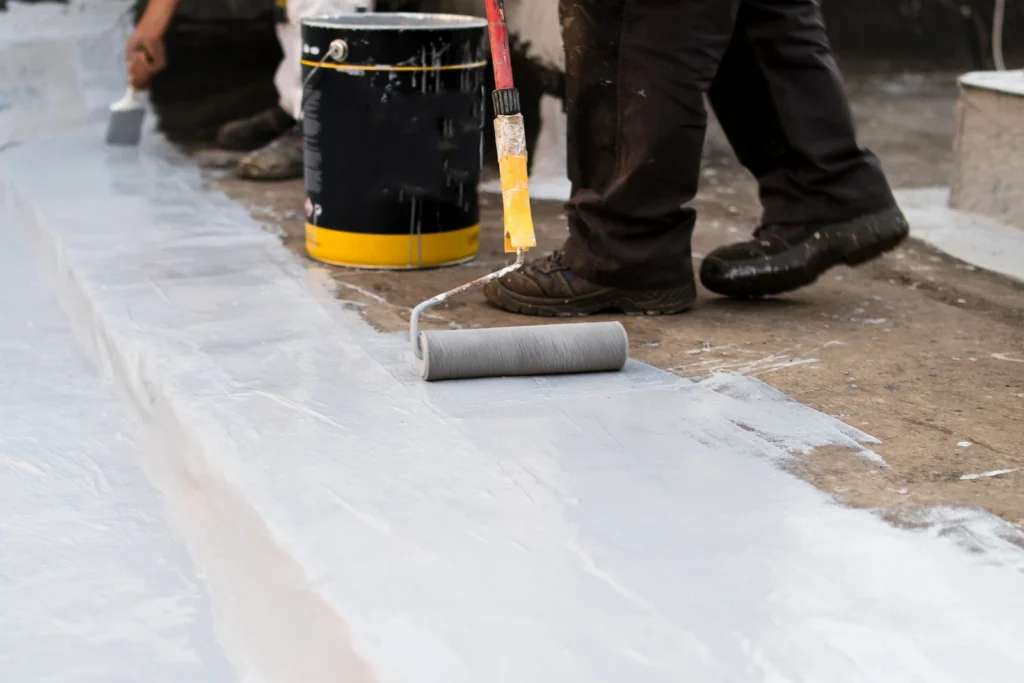
Your Commercial Roof Moves More Than You Think
Commercial roofs expand, contract, and shift throughout the year. Over time, that movement can cause sealants to fail, seams to separate, and cracks to form.
Elastomeric roof coating is designed to move with the roof. Its flexibility helps maintain a protective barrier despite changing temperatures and weather conditions, making it a popular restoration solution for commercial buildings.
The Reason Elastomeric Roof Coating Exists
Commercial roofs rarely fail all at once. They break down gradually as movement stresses seams, fasteners, expansion joints, and flashing details.
Standard repairs often treat the visible issue—a crack, seam, or leak—without addressing the movement that caused it.
Elastomeric roof coating takes a different approach. It forms a continuous layer that stretches and recovers with the roof, helping maintain protection through temperature changes and weather exposure.
What Makes an Elastomeric Roof Coating Different?
Not all roof coatings perform the same way. The defining characteristic of an elastomeric coating is its ability to remain flexible after curing.
Once installed, the coating becomes an elastomeric roofing membrane capable of handling movement while maintaining its protective properties. Four performance characteristics separate elastomeric systems from conventional coatings.
Elasticity
Elasticity refers to a material’s ability to stretch and return to its original shape. This characteristic allows elastomeric coatings to respond to thermal movement without becoming brittle or cracking.
Elongation
Elongation measures how much a material can stretch before failure. High-performance elastomeric coatings are designed with substantial elongation capabilities, allowing them to accommodate the movement that occurs naturally across commercial roofs.
Without sufficient elongation, even minor expansion and contraction can create cracks that eventually compromise waterproofing performance.
Tensile Strength
Flexibility alone isn’t enough. A coating must also resist tearing and mechanical stress.
Tensile strength measures a material’s ability to withstand pulling forces before failure. The strongest elastomeric systems balance flexibility with durability, creating a membrane that stretches when necessary while remaining structurally sound.
Recovery
Recovery refers to a coating’s ability to return to its original shape after being stretched. This characteristic helps maintain long-term performance even after years of movement and environmental exposure.
Together, these properties help explain why elastomeric coatings remain one of the most widely used restoration systems in commercial roofing.
Why Some Roof Coatings Fail While Elastomeric Systems Last
Some coatings become brittle over time, leading to cracks, adhesion loss, and premature failure.
Elastomeric coatings are designed to flex with the roof, helping absorb stress caused by daily and seasonal temperature changes.
In climates with frequent temperature swings, that flexibility can significantly improve long-term performance.
Where Elastomeric Roof Coating Performs Best
One reason elastomeric coatings remain popular is their versatility. They can be used across a wide variety of commercial roofing systems, particularly where movement and weather exposure are major concerns.
Metal Roof Systems
Metal roofs expand and contract more noticeably than many other roofing materials. An elastomeric coating helps accommodate this movement while protecting fasteners, seams, and exposed surfaces from weather-related deterioration.
This makes elastomeric systems a common choice for metal roof restoration projects.
Aging Commercial Roofs
Many commercial roofs remain structurally sound even after years of service. While surface wear and weathering may be visible, replacement is often unnecessary. An elastomeric coating can restore protection while helping extend the useful life of the existing roof.
Low-Slope Roofs
Commercial low-slope roofing systems frequently experience thermal stress due to large exposed surface areas. The flexibility of elastomeric coatings allows them to perform well under these conditions while maintaining weatherproofing performance.
Elastomeric Coating for Flat Roof Applications
Flat roofs create unique challenges.
Large surface areas are exposed to direct sunlight throughout the day. Temperature changes occur across the entire roof assembly. Roofing materials expand, contract, and shift as environmental conditions change.
An elastomeric coating for flat roof applications helps address these conditions by creating a seamless membrane capable of moving with the roof.
In addition to flexibility, many elastomeric systems offer excellent reflectivity.
Reflective coatings help reduce roof surface temperatures, which may reduce thermal stress and improve overall roofing performance.
For building owners evaluating restoration options, this combination of flexibility and weather protection makes elastomeric coatings an attractive solution.
When Elastomeric Roof Coating May Not Be the Best Choice
Elastomeric coatings aren’t the right fit for every roof. They should never be used to cover structural damage or significant moisture issues.
In some cases, alternative coating systems may provide better performance, particularly on roofs with chronic ponding water.
The best solution depends on the roof’s condition, which is why a professional inspection is essential before any restoration project.
Get a Commercial Roofing Inspection and Free Estimate from Show Me Coatings Today
What Determines the Cost of an Elastomeric Roof Coating System?
For most commercial buildings, elastomeric roof coating typically costs $1.50 to $4.50 per square foot, depending on the roof’s condition, preparation requirements, and coating specifications.
Because restoration reuses the existing roof system, it is often significantly less expensive than a full roof replacement.
Roof Size
Larger roofs require additional material and labor, increasing overall project costs.
Existing Roof Condition
Preparation often has a greater impact on cost than the coating itself. Repairs, cleaning, seam reinforcement, and surface preparation can all affect pricing.
Required Mil Thickness
Coating thickness plays a major role in long-term performance. Higher mil thicknesses require more material and labor but may improve durability and warranty coverage.
Roof Complexity
Rooftop equipment, penetrations, access limitations, and architectural complexity can increase installation time and labor requirements.
Cost Comparison
| Roofing Option | Typical Cost Range |
| Elastomeric Roof Coating | $1.50–$4.50 per sq. ft. |
| Commercial Roof Replacement | $7–$20+ per sq. ft. |
While every roof is different, restoration often provides a cost-effective way to extend roof life without the expense and disruption of replacement.
Frequently Asked Questions About Elastomeric Roof Coating
Can elastomeric roof coating be applied over an existing roof?
In many cases, yes. Elastomeric coatings are commonly applied over metal roofs, modified bitumen systems, spray foam roofs, and other commercial roofing substrates that remain structurally sound.
What’s the difference between elastomeric and acrylic roof coating?
Acrylic coatings are a type of elastomeric coating. While all acrylic coatings are elastomeric, not all elastomeric coatings are acrylic. Performance characteristics vary depending on the coating chemistry and intended application.
Is elastomeric roof coating better than roof replacement?
It depends on the roof’s condition. If the roof structure is still sound, restoration with an elastomeric coating may extend service life at a significantly lower cost than replacement.
Does elastomeric roof coating improve energy efficiency?
Many elastomeric coatings are manufactured with reflective properties that help reduce heat absorption and lower roof surface temperatures, particularly on large commercial buildings.
Can elastomeric coatings be recoated in the future?
Yes. Many elastomeric roofing systems can be renewed through additional coating applications, helping extend roof performance without requiring a complete replacement.
What types of commercial buildings use elastomeric roof coatings?
Elastomeric coatings are commonly used on warehouses, manufacturing facilities, schools, churches, retail centers, office buildings, and agricultural structures with low-slope roofing systems.
How do I know if my roof is a candidate for elastomeric restoration?
A professional roof inspection can determine whether the roof is structurally sound, free from significant moisture damage, and suitable for a coating-based restoration system.
Are elastomeric roof coatings environmentally friendly?
Because they can extend the life of an existing roof and reduce tear-off waste, elastomeric restoration systems are often considered a more sustainable alternative to full roof replacement.
Why Long-Lasting Roof Systems Start With Flexibility
Commercial roofs are constantly exposed to movement, weather, and thermal stress. Elastomeric roof coating helps absorb that stress through flexibility, elongation, and seamless protection, extending roof performance without restricting natural movement.
In roofing, longevity isn’t just about strength—it’s about flexibility.
Also Worth Reading
Silicone Roof Coating: Benefits, Cost, and How It Protects Flat Roofs
Ready to Find Out What Your Roof Actually Needs?
Book Your Free Commercial Roof Assessment — Contact Show Me Coatings Today.
Show Me Coatings serves commercial and industrial property owners across Missouri and Iowa, specializing in roof coating, metal roof restoration, membrane restoration, and fabric-reinforced roofing systems. Office: 660-956-0141 | 24hr Emergency Line : 660-216-1932