
Commercial Roofing Contractors Iowa: Expert Solutions for Business Roofs
For many Iowa business owners, the roof is often “out of sight, out of mind” until a leak disrupts operations. However, in a state where temperatures can swing from -20°F in January to over 90°F with high humidity in July, your roof is your first line of defense. Selecting the right commercial roofing contractors in Iowa is not just about finding a repair crew; it is about partnering with consultants who understand the specific thermal expansion and contraction cycles unique to the Hawkeye State. Lowa’s commercial sector—from Des Moines’ tech hubs to Cedar Rapids’ manufacturing zones and Sioux City’s riverfront—demands diverse, specialized roofing solutions. Whether for a small retail shop or a large distribution center, modern systems like TPO and modified bitumen require expertise that residential contractors cannot provide.
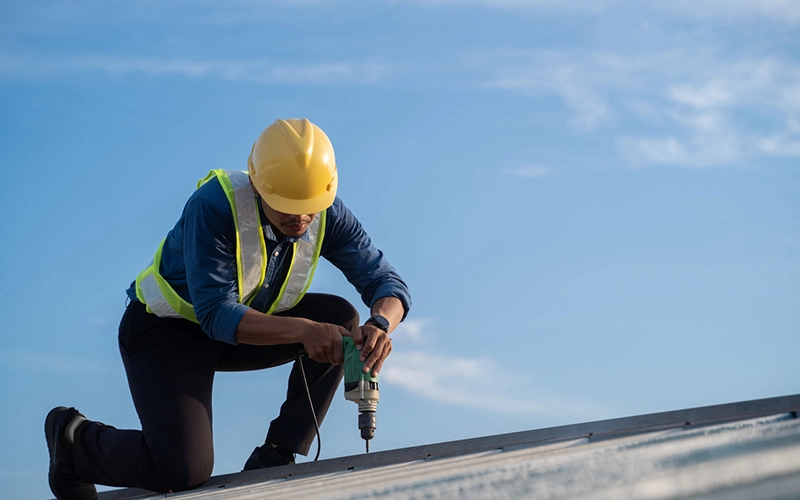
The Critical Role of Commercial Roofing Contractors in Iowa
Hiring a generalist for a commercial project is a common mistake for beginners. Commercial roofing contractors in Iowa must navigate stricter building codes, more complex insurance requirements, and the integration of heavy HVAC systems that are rarely present in residential settings. Roofing will be data-driven in the near future, with top contractors using infrared scans and drone moisture mapping to detect issues early. Prioritize local experts who understand Iowa’s derecho winds and heavy snow loads, as their use of stronger fastening and reinforced flashing can extend a roof’s life from 10 to 30 years.
Fix leaks fast with our expert roof Repair services.
Industrial Roofing Companies in Iowa: Specialized Solutions for Large-Scale Facilities
While “commercial” and “industrial” are often used interchangeably, there is a significant technical divide. Industrial roofing companies in Iowa cater to warehouses, food processing plants, and manufacturing hubs. These buildings face unique internal stressors—such as chemical exhaust, high-vibration machinery, and extreme internal heat—that can degrade a standard commercial roof from the inside out.
Choosing the Right System for Complex Environments
For example, a food processing plant in Ottumwa might deal with animal fats or chemical cleaners being vented onto the roof. In this scenario, a standard EPDM (rubber) roof would swell and fail quickly. An expert industrial contractor would instead recommend PVC (Polyvinyl Chloride), which is naturally resistant to chemicals and grease. Understanding these site-specific variables is the hallmark of a true industrial specialist.
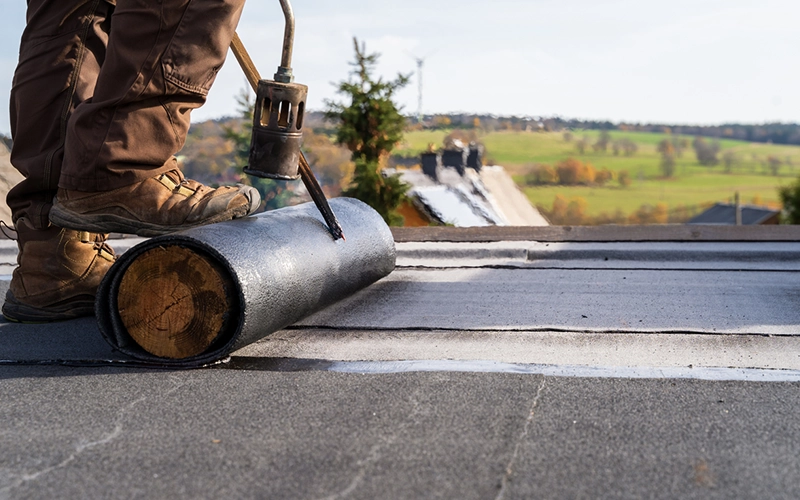
Flat Roof Contractors Iowa: Mastering Low-Slope Drainage
The vast majority of business structures utilize flat or low-slope designs. Flat roof contractors in Iowa specialize in systems where water does not shed naturally via gravity, as it does on a sloped shingle roof. In Iowa’s climate, the biggest threat to a flat roof is the freeze-thaw cycle. Water that pools (ponds) on a roof during a sunny March afternoon can seep into tiny cracks, freeze at night, and expand, effectively “prying” your roof seams apart.
Professional flat roofers prioritize tapered insulation systems, which create a slight slope to direct water toward drains and scuppers. If water remains on your roof 48 hours after rain, the drainage system is failing and requires expert intervention before excess weight damages the structure.
Commercial Roof Repair Iowa: Proactive Mitigation vs. Reactive Crisis
When a leak occurs, the natural instinct is to call for the cheapest patch. However, commercial roof repair in Iowa should be viewed through the lens of “Asset Management.” A recurring leak in a West Des Moines office park is rarely just a hole; it is often a symptom of failing seams, aged flashing, or saturated insulation.
Modern repair techniques have evolved. Instead of “rip and replace,” many Iowa businesses are opting for silicone or acrylic roof coatings. These liquid-applied membranes can be installed over an existing roof, effectively “shrinking” the entire surface into a seamless, waterproof barrier. This can extend the life of a roof by 10 to 15 years at a fraction of the cost of a full replacement, while also qualifying as a maintenance expense for tax purposes.
Understanding Iowa’s Unique Roofing Challenges
The following table compares common commercial roofing materials and their performance specifically within the Iowa climate variables of 2026.
Material Type | Best Use Case | Iowa Weather Performance | Expected Lifespan |
TPO | Retail & Office | Excellent UV reflection; highly energy-efficient. | 20–25 Years |
EPDM (Rubber) | Schools & Warehouses | Best for extreme cold; handles hail well. | 25–30 Years |
PVC | Restaurants/Industrial | Resistant to chemicals and grease. | 20–30 Years |
Metal | Low-Maintenance Buildings | Highest durability; sheds snow easily. | 40–50+ Years |
Modified Bitumen | High-Traffic Roofs | Durable against foot traffic and punctures. | 15–20 Years |
Understand weather impact data from the National Weather Service, especially for Midwest storm conditions.
Roofing Services for Businesses Iowa: A Holistic Approach
Comprehensive roofing services for businesses in Iowa go beyond the physical membrane. They include:
- Energy Audits: Ensuring your roof's R-value (insulation power) meets 2026 Iowa Energy Code requirements to lower your MidAmerican Energy or Alliant Energy bills.
- Preventative Maintenance: Bi-annual inspections in Spring and Fall to clear drains and check for wind-scoured areas.
- Emergency Response: 24/7 service to mitigate interior damage during Iowa's frequent severe thunderstorms and hail seasons.
- Warranty Management: Documenting all repairs to ensure manufacturer warranties remain valid.
By choosing a full-service partner, business owners move from being “reactive” (spending more on emergency repairs) to “proactive” (spending less on long-term stability).
Metal Roofing Contractors Iowa: The Ultimate Long-Term Investment
For businesses looking for a “forever roof,” metal roofing contractors in Iowa offer the most durable solution. While the initial capital expenditure for a standing-seam metal roof is higher than that of single-ply membranes, the ROI is unmatched. Metal roofs are virtually impervious to Iowa’s heavy snow loads and can withstand wind speeds that would shred asphalt or rubber.
In 2026, cool-roof technology in metal coatings has advanced significantly. Specialized pigments can reflect up to 85% of solar radiation, keeping a Waterloo factory significantly cooler in July without taxing the HVAC system. Furthermore, metal is the ideal substrate for commercial solar panel installations, which are becoming increasingly common across Iowa’s agricultural and industrial sectors.
Extend roof life with our advanced metal Roof Restoration solutions.
Commercial Roof Installation in Iowa: The Process Decoded
A successful commercial roof installation in Iowa is a multi-stage engineering project. For beginners, the process typically follows these steps:
- Core Sampling: The contractor drills a small hole in the existing roof to see how many layers exist and if the underlying insulation is wet. (Iowa code generally limits buildings to two roof layers).
- Tear-Off vs. Recover: If the insulation is dry, a "recover" (adding a new layer) may be possible. If it's wet, a full "tear-off" is required to prevent structural rot.
- Deck Preparation: Ensuring the steel, wood, or concrete deck is primed and structurally sound.
- Insulation & Membrane: Installing the R-value layers and the waterproof membrane (TPO, EPDM, etc.).
- Flashing & Detailing: The most critical part. Most leaks happen at the edges, vents, and HVAC curbs, not in the middle of the roof.
Roof Maintenance Contractors Iowa: Protecting Your Capital Asset
The secret to a 30-year roof is not the brand of the material; it is the quality of the maintenance. Roof maintenance contractors in Iowa provide scheduled “check-ups.” In Iowa, we deal with “ice damming” in the winter and debris from high-wind events in the summer. A simple clogged drain can lead to thousands of gallons of water sitting on your roof, adding tons of unnecessary weight to the building’s joists.
A professional maintenance plan often costs less than one emergency repair. It covers gutter cleaning, sealing minor flashing cracks, and spotting early signs like blisters or alligatoring before they turn into leaks.
Common Questions for Iowa Commercial Roof Owners
How does Iowa's humidity affect roof installation?
In Iowa, high humidity can cause “blistering” if a contractor installs a roof while there is moisture trapped in the system. Expert commercial roofing contractors in Iowa use moisture meters and only install during specific “weather windows” to ensure a bone-dry seal.
What are the 2026 Iowa tax incentives for energy-efficient roofs?
Many Iowa businesses can take advantage of the Section 179D tax deduction for energy-efficient commercial building improvements. Installing a high-reflectivity TPO roof or adding extra insulation can often be written off in the first year, providing a massive financial cushion for the project.
Is hail coverage standard for Iowa commercial roofs?
While most insurance policies cover hail, many manufacturers offer “Impact Resistant” (Class 4) ratings. If your business is in a high-hail area like Western Iowa, investing in a reinforced membrane can lower your annual premiums and prevent the need for a total replacement after a storm.